
Authentic New York Pizza Dough
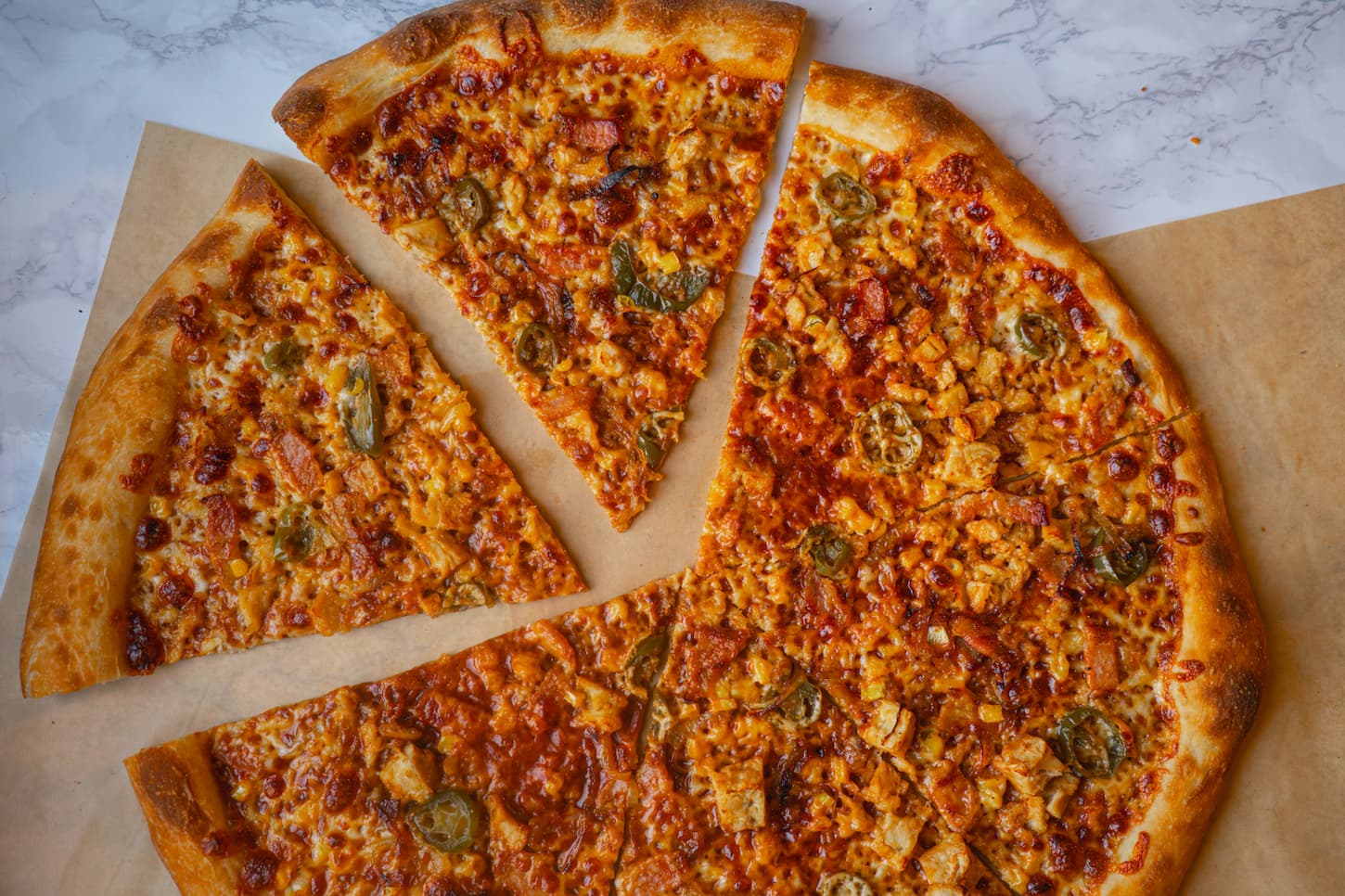
You’re craving real New York pizza, the kind with a slightly charred, blistered crust that folds without cracking, a chew that has actual substance, and a flavor that tastes as if it fermented for days. Because it did. This Authentic New York pizza dough recipe delivers exactly that classic pizzeria texture and flavor at home.
Here’s the thing: the version you’re imagining isn’t a restaurant secret. It’s not a commercial oven. It’s not a closely guarded recipe. It’s just time in your refrigerator, and ingredients you already have. The pizzeria down the block isn’t doing anything you can’t do; they just started making it for you two days before you even knew you wanted pizza.
You can do the same. You start tonight. You bake later. And the result sitting on your kitchen table will be better than anything that arrives in a cardboard box.
Need it tonight instead?
My Same-Day New York Pizza Dough gets you great pizza in 3 hours, no planning required.
Always Intend to plan ahead – But Never have time?
Eat well without the mental load. New York Pizza Dough takes some planning and prepping in advance let me plan it into your schedule.
Getting an 18″ NY Pizza Out of a Home Oven
An 18″ pizza sounds ambitious until you actually try it and then it just becomes the only size worth making. The catch is that most home stones and steels top out around 14–16 inches, which means you need a workaround if you want those big, fold-down-the-middle NY slices.
Here’s the secret that will ruin pizza chain pizza for you: start your cold-fermented dough on an 18″ pizza screen (cheaper than a takeout pizza).
3–4 minutes on the screen sets the base. Then slide the screen out and let the pizza ride directly on the stone or steel for another 6–8 minutes until the crust is blistered and the cheese is going golden at the edges.
The screen buys you the size. The stone gives you the crispy bottom. And after two days of cold fermentation, your New York pizza dough is full of flavor.
Two of these big pizzas and the whole family is fed. No rotating smaller pizzas in and out of the oven, no one waiting, no lukewarm slices. Just two rounds and dinner is done.
Low-Moisture Mozzarella Is Non-Negotiable
If you grab fresh mozzarella balls at the store, put them back. Fresh mozzarella is beautiful on a Neapolitan pizza, but on a NY slice it’s a disaster. It holds too much water, steams instead of melts, and turns your crust soggy before it even hits the table. What you want is a brick of whole-milk, low-moisture mozzarella. Grate it yourself if you can. It melts clean, pulls into those long stretchy strings, and actually browns at the edges the way a real NY slice should on homemade New York pizza dough.
I Didn’t Learn This In My Home Kitchen
From cooking at a James Beard Award-winning restaurant in New York City, to returning to Italy again and again to eat my way through it, to running my own wood-fired pizzeria out of a horse trailer — cold fermentation is the one technique that changed everything. It’s the reason this New York pizza dough tastes the way it does. Read more about my journey to owning a restaurant →
And the recipes don’t stop here. If this one has you hooked, try my Authentic Neapolitan pizza dough recipe next.
What you’ll need
Pizza Stone/Steel
Gives your crust that crispy, blistered bottom you can’t get from a regular pan. I use a steel — it heats faster and holds temperature better.
The single most important tool for consistent dough. Volume measurements vary too much. Weight is the only way to get the same result every time.
My go-to for large NY pizzas that won’t fit my steel. Start it on the screen, then slide it off halfway through so the bottom still gets that direct heat and crisps up right.
How you get the pizza in and out of a hot oven without losing your toppings (or your fingers). A wooden peel is best for launching, and metal for retrieving.
Can I freeze New York pizza dough?
Yes, we love doing this at our house. Do the cold ferment first. That 48–72 hours in the fridge is where the flavor happens. Freezing before the ferment and hoping the thaw does the fermenting doesn’t work as well in my experience. Let your New York pizza dough ferment fully, then freeze.
Lightly oil each ball, wrap tight in plastic wrap, freeze on a flat tray, then move to a zip-lock bag once they’re solid. Use them within 4 weeks. After that the yeast starts to go and the crust is flat and not chewy.
To use: thaw in the fridge the night before or I’ll leave mine out on the counter all day and that works too. Either way, give it a full 1–2 hours at room temperature before you start shaping. That’s when it relaxes into something you can actually work with.
A note from Brooklynn
This recipe takes me back to my younger self in my NYC line-cook era. Sparkly Doc Marten knock-offs, a thrifted 80’s windbreaker, and a paper plate— I was 23, broke, and completely free. The city was humming outside and there was grease on my fingers and not a single care in the world. This recipe is my love letter to that girl and those nights in New York.
— Brooklynn


Cold Fermented New York Pizza Dough (True NY Pizzeria Quality)
Ingredients
- 463 g bread flour 70%
- 199 g all-purpose flour 30%
- 443 g water — cool or room temp around 70°F
- 3 g instant or active dry yeast
- 2 tsp sugar
- 2 tbsp olive oil
- 13 g salt added last, not with the flour
Instructions
1. Mix the dry ingredients, without the salt.
- Whisk the two flours together in a large bowl, then mix the yeast directly into the flour (with a long ferment, it will activate on its own).
3. Bring the wet and dry together.
- Add the water, and the olive oil to the flour. Mix in a stand mixer or with your hands until a shaggy, rough dough forms.
4. Knead until smooth, before the salt goes in.
- Turn the dough onto a lightly floured surface and knead by hand for 8–10 minutes, or use a stand mixer on medium for 6–7 minutes, until the dough is smooth, elastic, and tacky but not sticky. It should pull back slightly when you stretch it.
5. Add the salt, and knead it in.
- Sprinkle the salt evenly across the surface of the kneaded dough and work it in for another 2–3 minutes until fully incorporated. The dough will tighten slightly; that's the gluten responding to the salt.
6. Divide and ball
- Turn it onto a lightly floured surface and divide it into two portions (about 560g each) for 2 large 16-18 inch pizzas. Shape each one into a tight, smooth ball by pulling the surface taut and pinching the seam closed at the bottom. Place the dough balls on a lightly oiled sheet tray or in individual covered containers.
7. Short bulk fermentation: let it breathe before the cold.
- Cover with plastic wrap or a lid, and let it rest at room temperature for about 30–minutes. This brief window at room temperature gives the yeast a warm start before the refrigerator slows everything down.
8. Cold fermentation: the work happens while you sleep.
- Transfer the dough balls to the refrigerator and leave it for a minimum of 30 hours, ideally 2-3 days. The dough will rise slowly in the cold while flavor compounds develop. Organic acids, complex sugars, and extensibility make the dough stretch like a dream. You don't have to do anything. The refrigerator is doing the work. Go live your life.The dough will keep in the refrigerator for up to a week, though 48–72 hours is the sweet spot for flavor and structure. After Cold Fermentation pull the dough from the refrigerator. It will be cold, firm, and have a faint tang when you smell it; that's exactly what you're after.
9. Final proof
- Leave them at room temperature for 2–3 hours before baking. Cold dough is tight and uncooperative; this rest period is what transforms it from a refrigerator brick back into something willing and stretchy. It will puff lightly and relax visibly. Don't skip or shorten this step.Use these 2–3 hours to prep every topping, set up your pizza station, preheat the oven with your stone or steel inside to 500–550°F, and pull out every tool you'll need for baking. When the dough is ready, you should be completely ready too.
10. Stretch, top, and bake
- Take a dough ball and press it gently from the center outward with your fingertips, coaxing it toward a 18-inch round. Let gravity do the work, pick it up, drape it over your knuckles, and let it stretch under its own weight. If it springs back, set it down for two minutes and try again. Don't force it. Top with sauce, cheese, and whatever you love. Slide it onto the preheated stone or steel. Bake for 6–8 minutes until the crust is deeply golden with dark spots and the cheese is bubbling and beginning to brown at the edges.While the first pizza bakes, stretch and top the next.
What You Just Made
That crust with the blisters and the char and the chew that holds up under the weight of real toppings, you made that. Not a restaurant. No delivery driver needed. And your kitchen is clean.
Once you’ve made homemade New York pizza dough from scratch, it’s hard to go back to anything else.
The only thing left to decide is whether you start another batch tonight.