
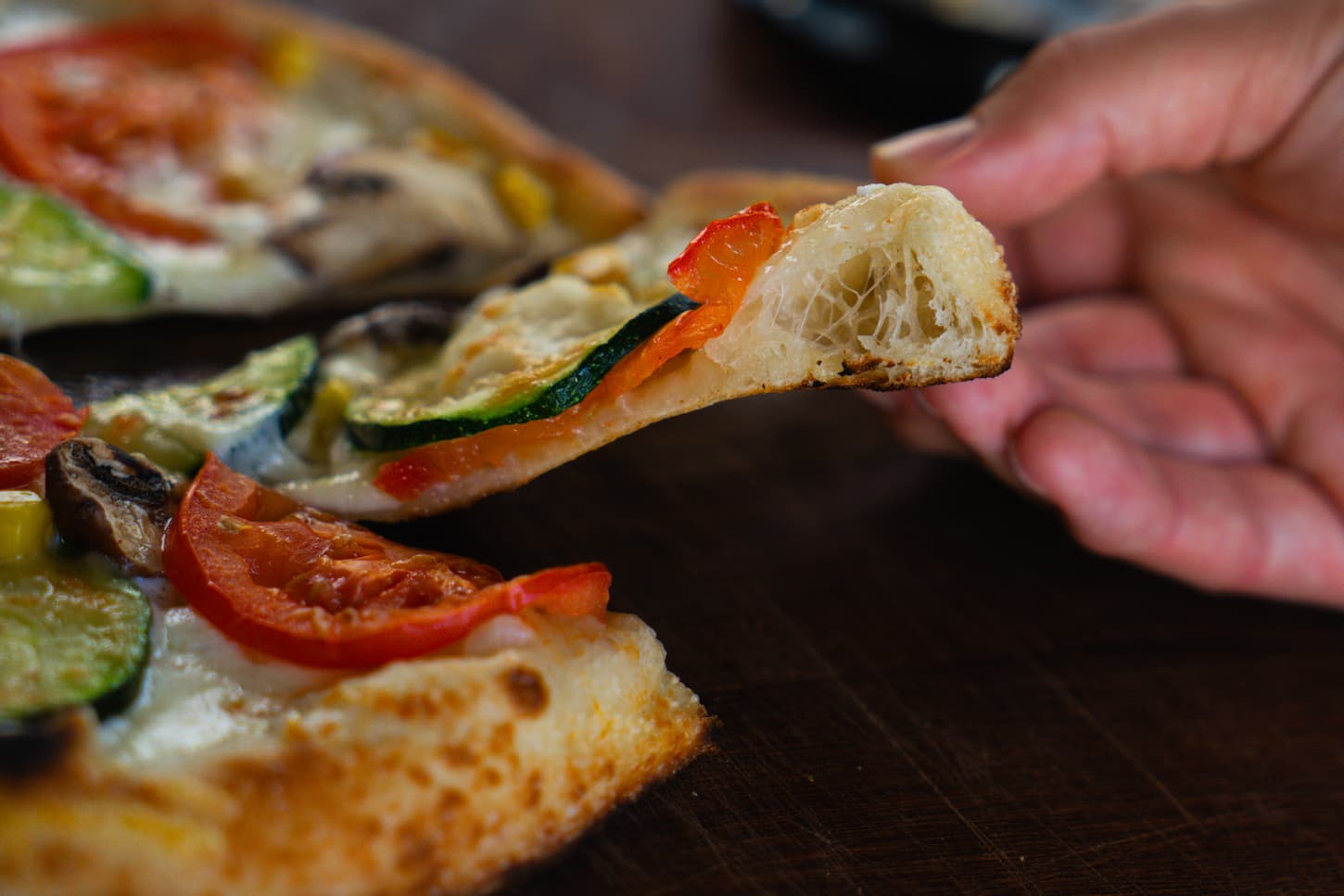
You’re about to make Neapolitan Pizza Dough that makes people ask if you were trained in Italy.
It can be intimidating to make pizza; all the preparation, the timing of the dough, the texture, the question of whether it will work out or not.
This Neapolitan pizza dough is here to make things easier.
This is my tried-and-true dough I used for my pizza business
the one that had people coming back again and again. (Read more about that story here.)
The process is simple and step-by-step, with only four ingredients, you will make a dough that is soft, airy, and full of flavor. The 48-hour slow fermentation works to your advantage, and when it comes to cooking time, it is pretty much just stretch, top, and bake.
Let’s Prepare Neapolitan Pizza Dough!
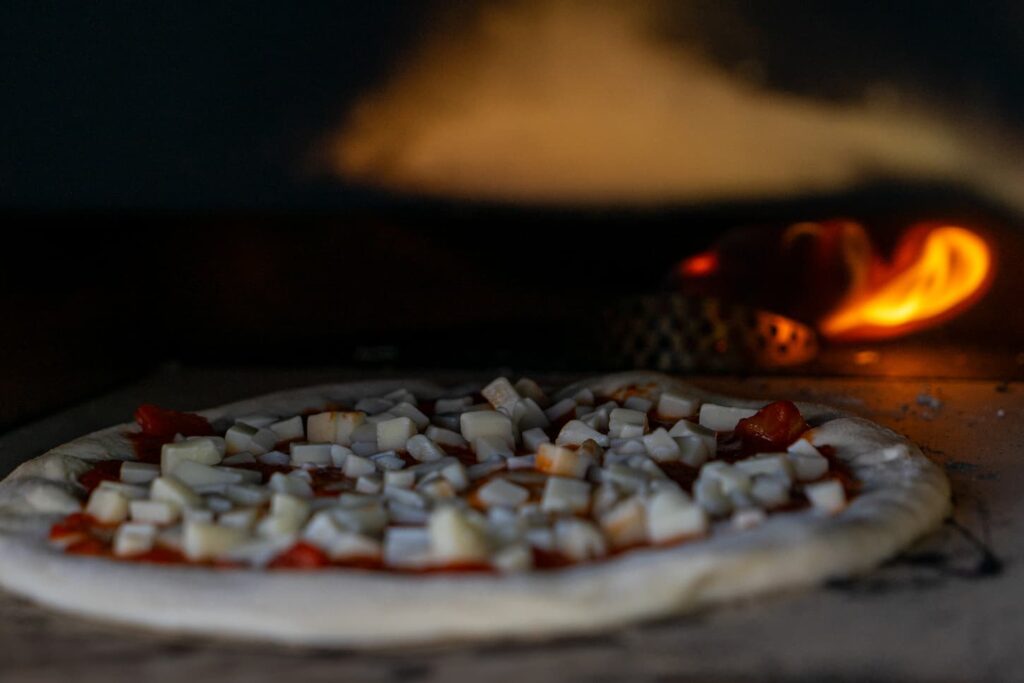
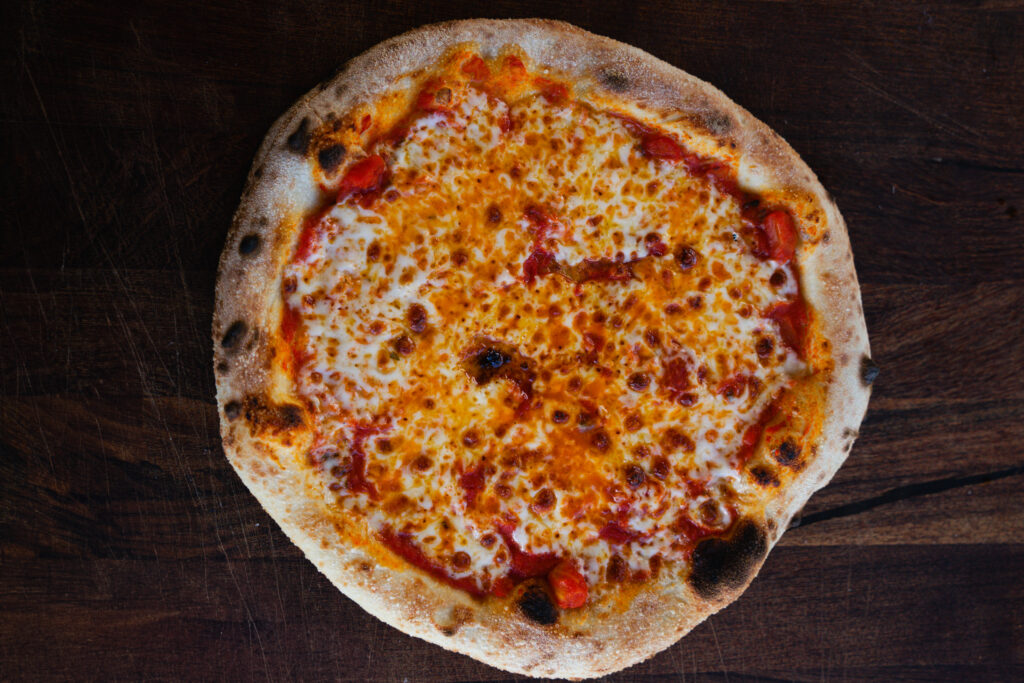


The Secret to this Neapolitan Pizza Dough.
- 00 flour creates a soft, elastic dough with that classic chew.
- 67% hydration keeps the dough light and easy to stretch.
- Cold fermentation takes 48 hours, and creates flavor
- The blistered crust is the result of high-heat baking.
Equipment You’ll Need
Digital scale (for consistent results)
Non-negotiable. Dough hydration is never effective unless your measurements are accurate.
Pizza stone, steel, or pizza oven
Preheat to high heat. The key to oven spring, blistering, and char.
Pizza peel (optional, but helpful)
To place and take out pizza in a hot oven without ruining the crust.
Stand mixer with dough hook (or mix by hand)
Makes kneading effortless. You can knead by hand, but 15 minutes is a workout.
Sheet pan with cover or plastic wrap
For covering dough balls during the 48-hour cold ferment.
Kitchen shears or pizza cutter
Either works for slicing.
A note from Brooklynn
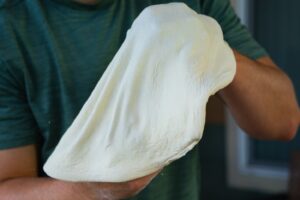
If this is your first time stretching Neapolitan dough, it might feel like it’s going to tear, or like you’re doing it wrong. Stay gentle. Keep your hands light, let it stretch itself, and trust the process. When it naturally stretches from gliding between your hands, you’ll know. You’re starting to bake like an artisan Pizzaiolo!
Want this in your weekly plan?
The Pleasant Plan sends you a done-for-you meal plan every week, tested recipes, thoughtfully timed, with a complete grocery list included. No more realizing too late that you needed to plan ahead.

Best Neapolitan Pizza Dough for Ooni & Roccbox Ovens
Equipment
- 1 oven
Ingredients
- 722 g 00 flour
- 483 g water room temperature
- 2.71 g instant dry yeast
- 22 g fine salt
Instructions
Measure everything first
- Consistent dough is based on accurate measurements; this is not the recipe to measure just with your eyes.
Dissolve the yeast
- Put the instant dry yeast in the water. Gently stir to mix and allow a minute. This gives a uniform distribution of the dough.
Mix the dough
- With the stand mixer on low speed, gradually add all the flour to the yeast water. Mix until a shaggy, rough dough is created. Bring to a speed of 2 and knead for 10 minutes.
Add the salt
- Add the salt and keep kneading on speed 3 for 5 minutes more, till completely mixed. The dough should be smooth, and stretchy. It will be sticky: oil or flour your hands to work with it.
Divide and ball
- Place the dough out onto a clean surface. Cut it into six portions of equal size, about 190 g each, and weigh on your scale. Roll each one into a tight, smooth ball.
Cold ferment for 48-72 hours
- Put the balls of dough on an oiled half sheet pan, and leave space between the balls to allow them to spread. Rub some olive oil on top of the dough balls as well. Tightly cover with plastic wrap or fitted lid to avoid the formation of a skin. Refrigerate for a minimum of 48 hours. The dough will keep in the refrigerator for up to a week. 48–72 hours is the sweet spot for flavor and structure.
Bring to room temperature
- Take the dough out of the fridge and allow it to come to room temperature (1-2 hours) before shaping. Dough that is at room temperature is loose, stretchable, and has the best oven spring.
Shape the dough
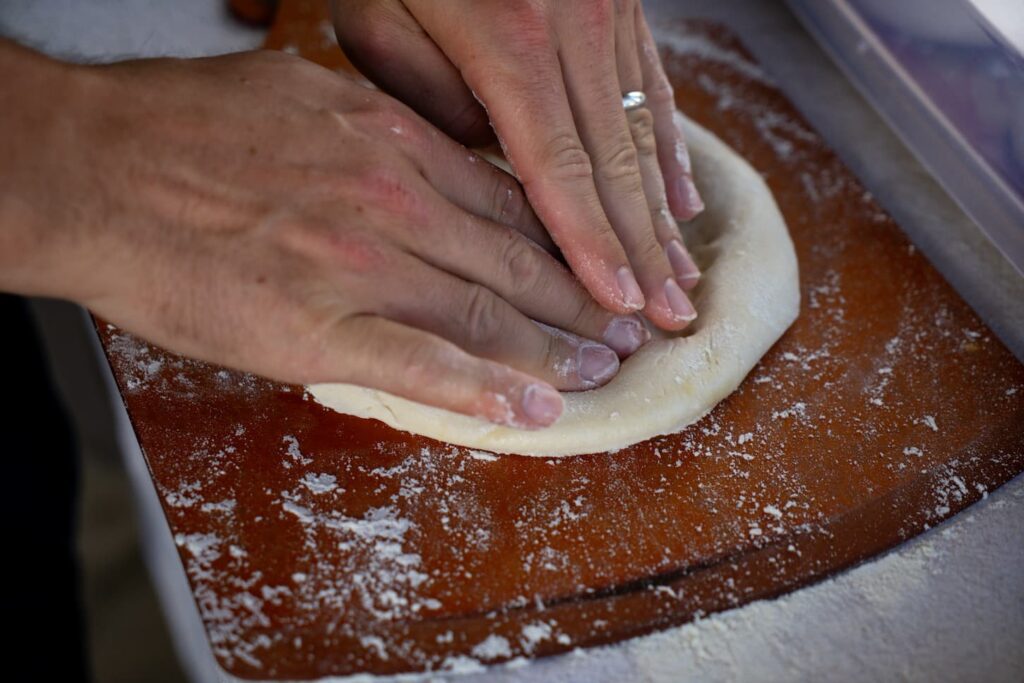
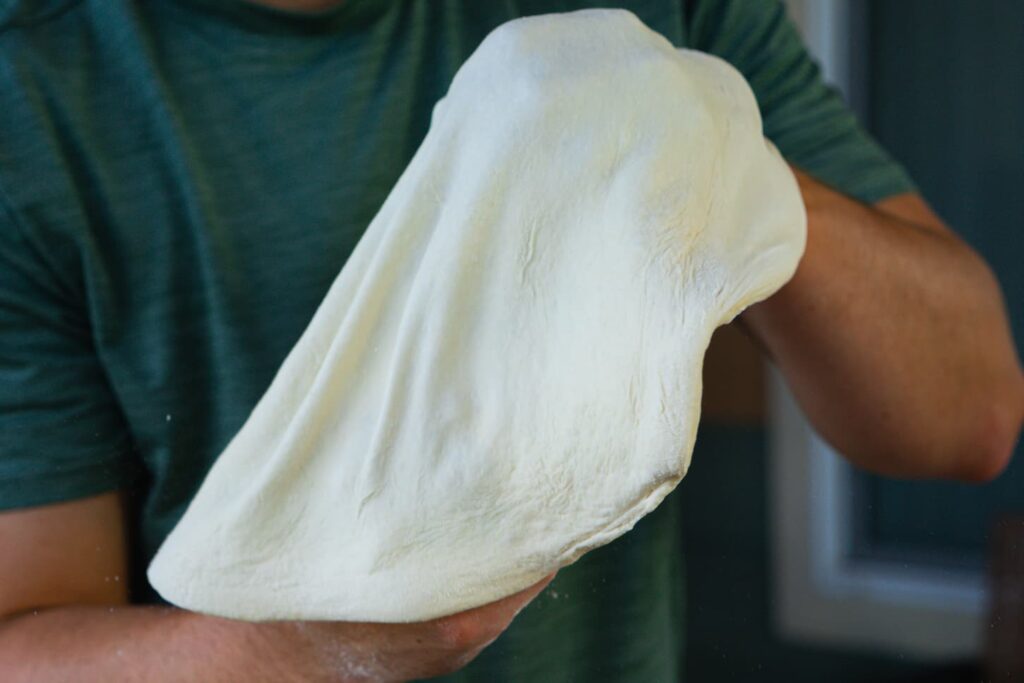
- Take one ball at a time and press in the center outward, with your fingertips. Preserve the gas bubbles at the edges; they become the airy, puffed crust. Do not use a rolling pin. Take the dough and allow the force of gravity to help you as you pull it into a 10-12 inch circle, with a thin center and a heavier rim.
Top and bake
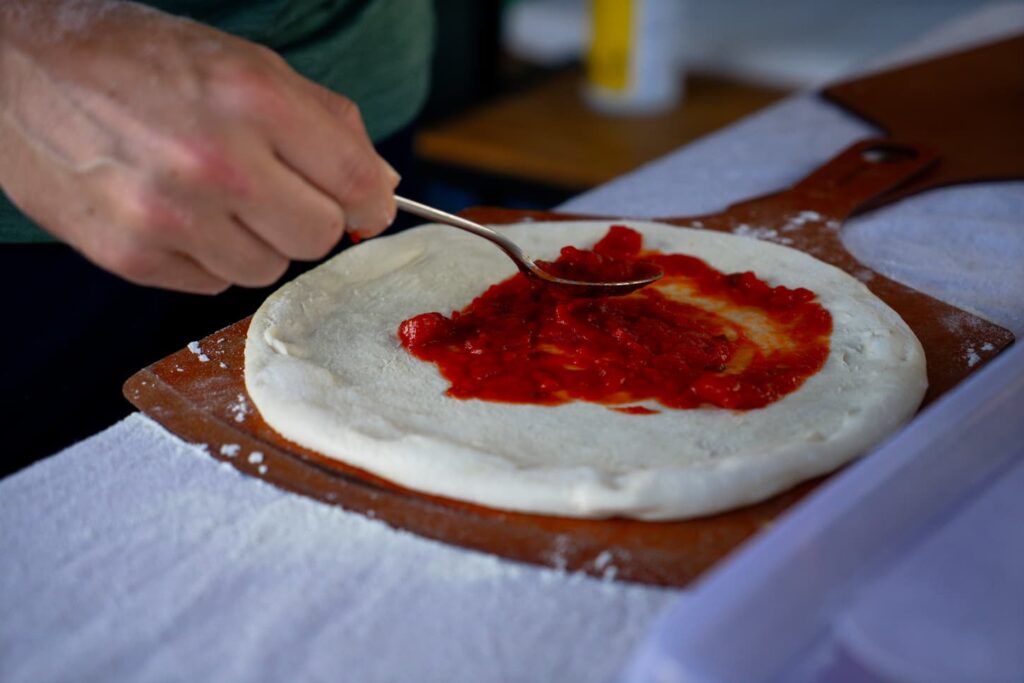
- Spread 2-3 oz of sauce in a thin layer, leaving a crust edge. Add fresh mozzarella, about 4 oz, sparingly. Place the pizza in a pre-heated oven and bake at high heat until the crust blisters, the edges puff, and the bottom is charred and crisp.
Notes
- If the dough resists stretching, let it rest for 5 minutes
- Use less toppings than you think
- Plan ahead once, relax later. The long fermentation makes the cooking day easy
- 2.5 Tablespoons sauce
- 4 oz cheese
- aim for exposed sauce and gaps between cheese pieces
Can I freeze my Neapolitan pizza dough balls?
Yes! The key is to complete your cold fermentation first. Let the dough balls cold ferment in the fridge for a full 24–72 hours before you freeze anything. The fermentation is what builds the flavor and structure that makes this dough full of flavor, don’t skip it or shortcut it to the thaw stage.
Once the ferment is complete, lightly coat each dough ball in olive oil, wrap individually in plastic wrap, and freeze flat on a tray. Once frozen solid, transfer to a zip-lock bag. Use within 4 weeks (after that, the yeast begins to lose activity and you’ll notice it in the rise and the texture).
When you’re ready to use it: thaw completely then bring to room temperature for 1–2 hours before shaping. Don’t rush it. A cold dough ball won’t stretch for you. I usually pull it out in the morning and leave it on my counter all day until I’m ready to bake in the early evening.
FROM THE FUTURE MENU — FOLLOW THE DREAM
This dough is already on the shortlist for my restaurant — wood-fired in a true Neapolitan oven, blistered, and served at a pleasant table. You’re welcome to follow along as that dream gets built. The more people at the table, the better.








Good